How Food Grade Sodium Chloride Supports Consistent Food Manufacturing
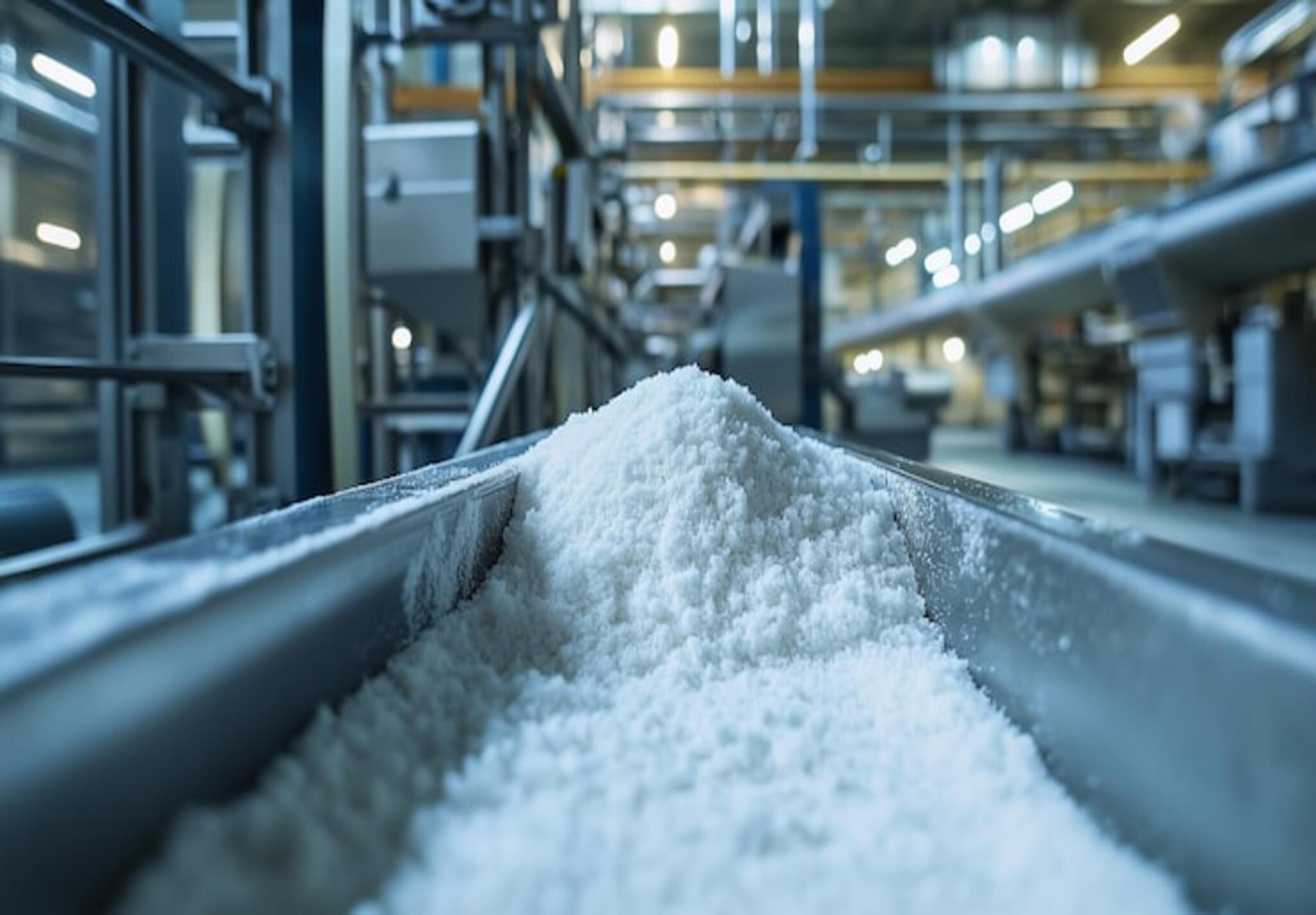
Table of Contents
- Why is sodium chloride important in food manufacturing?
- How does food grade sodium chloride improve batch consistency?
- Where is sodium chloride used in food processing?
- What makes food grade sodium chloride different?
- How should manufacturers evaluate sodium chloride price?
- What should you check when choosing a sodium chloride supplier?
- Why is sodium chloride powder suitable for food processing?
- How does CAS 7647-14-5 help with product identification?
- Supporting consistent food manufacturing with the right sodium chloride
Food manufacturing depends on ingredients that perform consistently from batch to batch. Sodium chloride is one such ingredient. It is widely used across food processing for flavour, preservation, texture, formulation, and other processing needs. Material quality can directly affect how smoothly these processes run.
Food-grade sodium chloride is identified by the CAS number 7647-14-5 and has the chemical formula NaCl. It is available as a crystalline material that is highly soluble in water. The FDA lists sodium chloride for several food-related technical effects, including antimicrobial, firming, flavouring, formulation aid, nutrient supplement, stabilising, and anticaking functions.
At Pyoraa, we supply food-grade sodium chloride for food, beverage, nutritional, and other regulated applications. We supply sodium chloride powder as a white crystalline material with high water solubility. We focus on consistent quality, suitable packaging, and documentation to support manufacturers working with a dependable sodium chloride supplier.
Why is sodium chloride important in food manufacturing?
Sodium chloride does more than add saltiness to food. Its properties make it useful across different stages of food production. The exact function depends on the product, formulation, and processing conditions.
Some common roles include:
- Supporting flavour and taste balance
- Helping control microbial activity in suitable food applications
- Supporting texture and firmness in certain products
- Acting as a formulation aid
- Helping maintain consistency during processing
- Supporting mineral or electrolyte formulations
- Providing controlled salt content in finished products
Because each application has different requirements, manufacturers need to select a suitable sodium chloride chemical grade rather than treating all salt products as interchangeable.
How does food grade sodium chloride improve batch consistency?
Consistency is important when food products are manufactured at scale. Even small differences in an ingredient can affect taste, texture, processing behaviour, or the final composition.
Consistent sodium chloride powder is beneficial in providing better control to the manufacturer's regular production activities:
- Accurate weighing during batch preparation
- Uniform blending with other dry ingredients
- Predictable dissolution in liquid formulations
- Consistent salt concentration
- Repeatable processing conditions
- Better control over finished-product specifications
The physical properties of a substance are just as important. Factors like particle size, purity, dryness, and solubility affect the physical state of sodium chloride chemical during a particular process.
Where is sodium chloride used in food processing?
Food manufacturers use sodium chloride across a wide range of products. Its role changes according to the formulation and manufacturing process.
| Food Application | Typical Role |
| Bakery products | Flavour and dough formulation support |
| Processed foods | Flavour, preservation, and formulation support |
| Snacks | Taste and seasoning |
| Meat products | Flavour, preservation, and texture support |
| Pickled foods | Preservation and flavour |
| Sauces and prepared foods | Taste and formulation support |
| Dairy products | Flavour and processing support |
| Nutritional products | Mineral and electrolyte contribution |
The FDA's food-substance database recognises several technical functions for sodium chloride, including antimicrobial, firming, flavouring, formulation aid, and stabilising functions.
What makes food grade sodium chloride different?
Food applications require closer attention to purity, specifications, and supporting documentation. Before placing an order, confirm the material suits the intended food application.
Important checks include:
- Food-grade classification
- Purity specifications
- Consistent chemical composition
- Certificate of Analysis availability
- Batch identification and traceability
- Packaging integrity
- Storage recommendations
- Relevant quality documentation
CAS number 7647-14-5 helps confirm the chemical identity of sodium chloride during procurement and documentation checks. However, buyers should also review the complete product specification rather than relying on the CAS number alone.
How should manufacturers evaluate sodium chloride price?
The sodium chloride price is only one part of the procurement decision. A lower quoted price may not offer the best value if the material does not meet the required specifications or if supply is inconsistent.
Manufacturers can assess the sodium chloride price alongside factors such as:
- Product grade and purity
- Order volume and packaging size
- Particle characteristics
- Documentation provided
- Batch-to-batch consistency
- Delivery requirements
- Long-term supply capability
For regular procurement, comparing the complete supply offer is more useful than comparing the sodium chloride price alone. This approach helps buyers balance product quality, supply reliability, and overall procurement cost.
What should you check when choosing a sodium chloride supplier?
A reliable sodium chloride supplier should provide clear information about the product and its specifications. This becomes especially important when sodium chloride is used repeatedly in a controlled manufacturing process.
Before selecting a supplier, manufacturers can check:
- Availability of food-grade material
- Product specifications and test information
- COA and SDS availability
- Batch traceability
- Packaging options
- Bulk supply capability
- Delivery consistency
- Technical product information
A dependable sodium chloride supplier can also make routine procurement easier by maintaining consistent product specifications and supporting documentation.
Why is sodium chloride powder suitable for food processing?
An ingredient's physical form affects how easily it can be stored, weighed, blended, and dissolved. Food-grade sodium chloride is commonly supplied as crystalline sodium chloride powder, making it practical for many industrial processes.
The powder form can support:
- Easy measurement during batch preparation
- Uniform dry blending
- Convenient handling and storage
- Quick dissolution in suitable liquid formulations
- Controlled addition during processing
- Efficient bulk handling
Store the material under suitable dry conditions to maintain its physical quality. Proper packaging also helps protect sodium chloride powder during transportation and storage.
How does CAS 7647-14-5 help with product identification?
Chemical identification is an important part of industrial procurement. Sodium chloride is registered under CAS 7647-14-5, which provides a standard reference for identifying the material across technical documents and purchasing records.
Manufacturers can use 7647-14-5 when checking:
- Product specifications
- Certificates of Analysis
- Safety Data Sheets
- Supplier documentation
- Internal purchasing records
- Regulatory information
Using 7647-14-5 alongside the product name and grade can reduce confusion during sourcing, particularly when manufacturers handle several mineral or chemical ingredients.
Supporting consistent food manufacturing with the right sodium chloride
Food manufacturing requires more than selecting an ingredient based on its basic function. Consistent results depend on purity, physical properties, batch quality, documentation, and reliable supply. Food-grade sodium chloride can support flavour, preservation, texture, formulation, and other processing needs when selected for the intended application.
For manufacturers, the right sodium chloride chemical should meet the required specifications and remain consistent across production batches. Reviewing the sodium chloride price, product grade, packaging, documentation, and supply capability together can help businesses make better procurement decisions. A dependable sodium chloride supplier can further support regular production by maintaining consistent quality and supply.
At Pyoraa, we supply food-grade sodium chloride powder for food, beverage, nutritional, and other industrial applications. Our product is identified by 7647-14-5 and supplied in 30 kg and 50 kg packaging. We focus on product consistency, documentation, and dependable supply for businesses that need a reliable sodium chloride supplier.
If you are looking to buy food-grade sodium chloride, connect with our team to discuss your specifications and quantity.
FAQs
FAQs for this blog will be updated soon.